June
Shortest days
Nine hours of light and the lowest sun of the year, which means long shadows down the valley and ice that never lifts on the shaded sections. Quiet, cheap and cold.
Microspikes, and one road
The tracks at Aoraki stay open all winter and almost nobody walks them, which is most of the appeal. What changes is underfoot: the Department of Conservation recommends microspikes and poles for the Hooker Valley because the shaded flat sections turn to sheet ice — and it is the flat parts, not the climbs, that catch people out. The other thing that changes is the road, and that one can end your trip before it starts.
Quick answer
The short answer. Take microspikes and poles for the Hooker Valley, check SH80 before you drive, and book the flight for the middle of the day rather than first light. Winter here gives you the clearest air of the year, empty tracks and about nine hours of daylight — and it takes days off you when a system parks over the Divide.
The flat bits are the problem
The one track everybody calls easy is the one DOC tells you to bring equipment for.
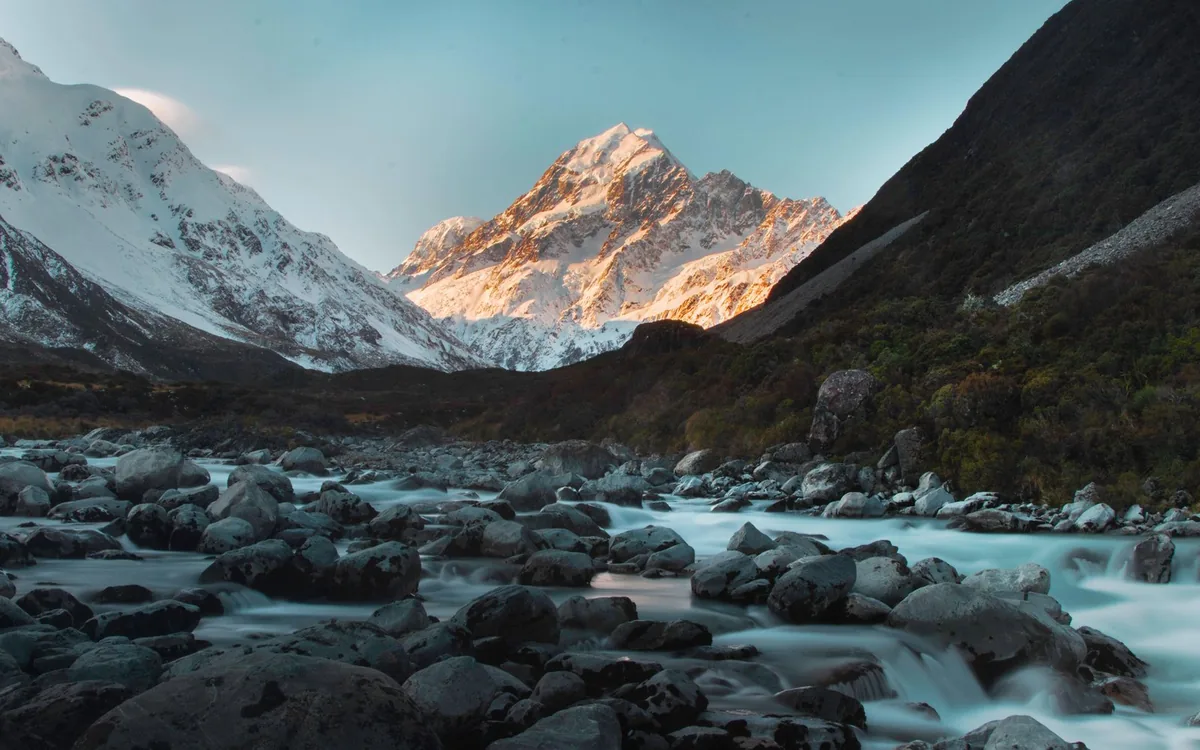
People arrive expecting the danger to be uphill, and it is not. The Hooker Valley Track is a boardwalk and a formed track running along a valley floor that gets very little winter sun, and the shaded sections hold a layer of ice that is genuinely difficult to stand on.
DOC does not usually recommend equipment for a track this easy, and the fact that it does here is the whole point. Microspikes — the light rubber-and-chain kind that pull over a walking shoe — turn the Hooker Valley from precarious back into easy. Poles do the rest.
They cost very little, they weigh nothing, and hire is available in Twizel and in the village. The alternative is a three-hour walk spent looking at your feet, on a track whose entire point is the view at the head of the valley.
Higher up, the equipment question changes character. On Sealy Tarns, DOC says an ice axe and crampons may be required to reach the tarns in winter and that avalanche risk may exist. That is not a microspikes problem; that is a different day out.
Planning a winter trip
Written for June to August, which is when this is worth doing and worth doing carefully.
One road in, fifty-five kilometres up Lake Pukaki, and DOC states plainly that snow can close it. A closed highway is not a weather delay, it is a cancelled trip. Check highway conditions the night before and again in the morning.
A three-hour walk and a flight in the same day is comfortable in January and tight in June. Do the flight first and the walk after, and be back at the car by four.
The reverse of summer advice. In winter the earliest slots are the coldest and the most likely to be held for ice on the machine; the middle of the day is when the air is best.
DOC’s own recommendation for the Hooker Valley. Hire in Twizel or the village if you did not bring any.
Ice axe and crampons may be needed for the tarns themselves, and there may be avalanche risk. In winter this is not the harder walk, it is a mountaineering objective.
Winter here gives you the clearest visibility of the year, snow to the valley floor and tracks with nobody on them. When a clear winter day lands at Aoraki it is the best day the place offers.
The cold months
Ranked on the odds of getting a usable day, not on temperature.
June
Nine hours of light and the lowest sun of the year, which means long shadows down the valley and ice that never lifts on the shaded sections. Quiet, cheap and cold.
July
Most likely month for snow on SH80 and for a system to sit over the Divide for days. Also the month with the sharpest air when it does clear.
August
Days lengthening, snow still low, and the first settled spells start to appear. The best of the three if you can only come in winter.
September
The valley tracks come right and the flights pick up. Above them, snow is still on Sealy Tarns and the Mueller Hut route holds ice into November.
Everything in this park, graded for a fine day — add one grade for winter.
How hard each walk is→Book direct
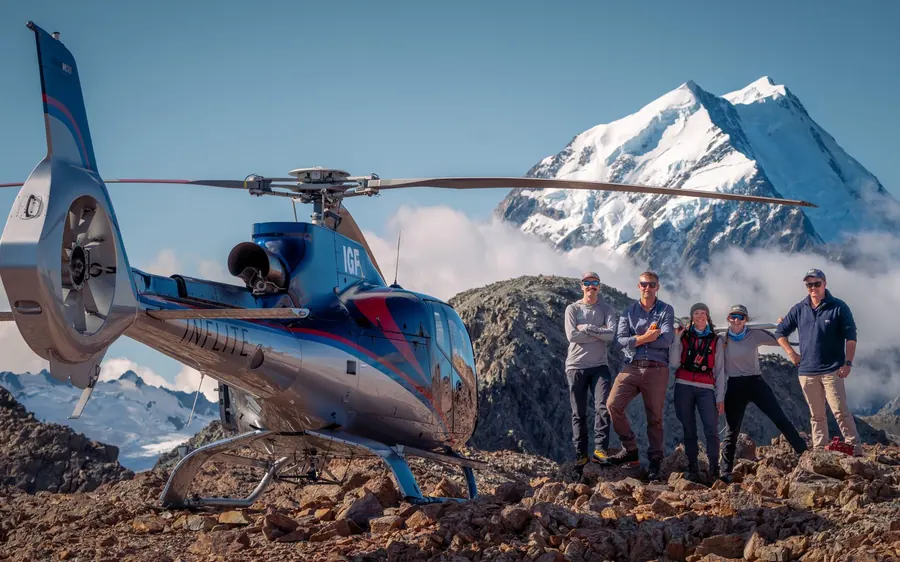
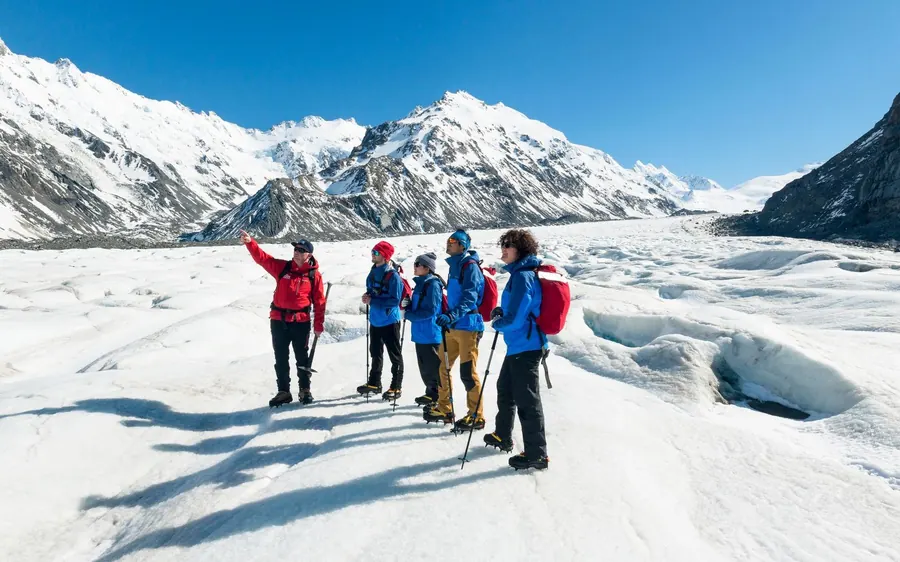
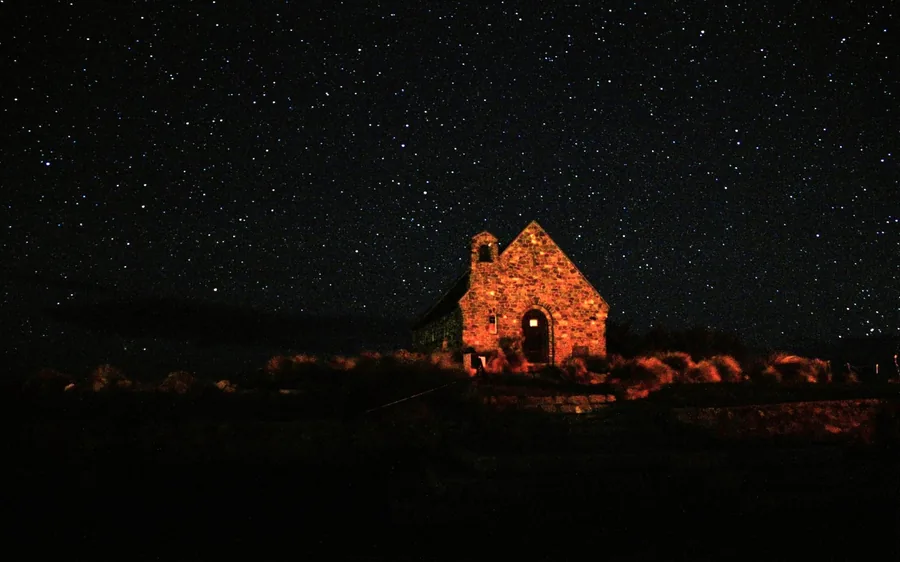
Clear air for the flights, an empty glacier, and the darkest skies of the year.
★ 4.7 · 514 reviews
★ 4.9 · 322 reviews
★ 5.0 · 9 reviews
Common questions
Yes, all the tracks stay open. DOC recommends microspikes and poles for the Hooker Valley because the shaded flat sections turn to sheet ice. Higher up, Sealy Tarns may need an ice axe and crampons and can carry avalanche risk.
DOC recommends them in winter, and it is worth taking that seriously — the track is flat and shaded, which is exactly the combination that ices over and stays iced. Hire is available in Twizel and at the village.
It can. SH80 is the only road in, and DOC advises checking highway conditions before you travel because snow can close it. Check the night before and again on the morning.
Yes, weather permitting, and it runs year-round. Winter brings the clearest air of the year and an almost empty glacier, at the cost of more days lost entirely to systems sitting over the Divide.
It is the best of the winter months. Days are lengthening, snow is still low on the ranges, and settled spells start to appear. Take microspikes and keep a spare day.
About nine in June, roughly eight in the morning to five in the evening. Enough for a flight and the Hooker Valley in the same day if you do the flight first.
Go deeper
Six marked tracks from the village, with real DOC times and distances.
On the iceThe only walk on the longest glacier in New Zealand, and what the three hours contain.
The famous oneTen kilometres return, three swing bridges, a lake full of icebergs, and it is free.
The hard one2,200 steps and 600 metres of climb, and where the walking stops and mountaineering starts.
The free view300 steps to a viewpoint over a lake that did not exist in 1970.
PricesThree heli hikes priced against the flights and against the walks that cost nothing.
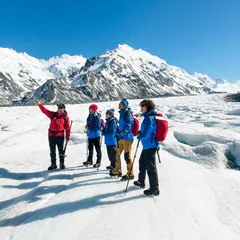
3-Hour Tasman Glacier Heli Hike
★ 4.9 · 646 reviews · Free cancellation 24 h