Our top pick322 reviews
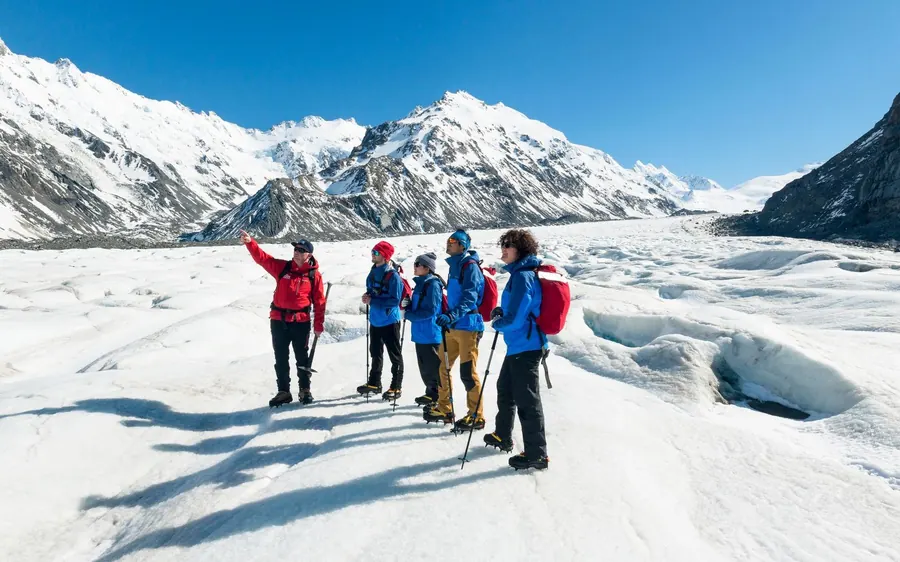
3 h3-Hour Tasman Glacier Heli Hike
★ 4.9 · 322 reviews
- Three hours, on New Zealand’s biggest glacier
- Helicopter fly-by
- Aoraki/Mount Cook
- Free cancellation
$497$165.67 / hour
Check availability→ Two lists, and a sandfly problem
The valley tracks at Aoraki need almost nothing: trainers, a rain jacket and water will get you to Hooker Lake and back in summer. The glacier needs almost nothing either, because the operator supplies the hard gear. What catches people out is a short list of small things — the wind that funnels down these valleys, the sandflies at the car park, and the fact that in winter the flat track is the slippery one.
Quick answer
The short answer. Valley tracks: trainers, a windproof rain jacket, two litres of water, sunscreen and repellent. Heli hike: thick socks and a warm mid-layer, because boots, crampons, a jacket and sunglasses are all supplied. In winter add microspikes and poles for the Hooker Valley.
For the valley tracks
Written for the Hooker Valley, Kea Point, Sealy Tarns and the Tasman Glacier View Track.
Not because it is cold — because DOC describes this region as experiencing very fast changes in weather, with strong wind, heavy rainfall and rapid temperature shifts year round. The valleys funnel a nor’wester straight at you and it arrives with almost no notice.
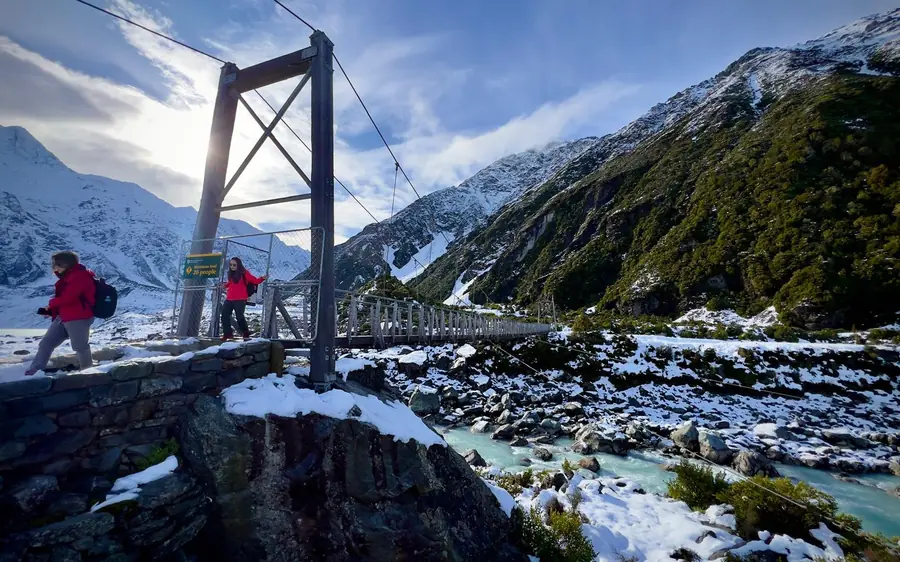
The Hooker Valley is formed track and boardwalk and needs nothing special from November to April. From May, DOC recommends microspikes and poles because the shaded flat sections turn to sheet ice.
There is no water on any of these tracks and the rivers are glacier melt full of rock flour. On Sealy Tarns, with 600 metres of climb and no shade, two litres is a minimum rather than a comfortable margin.
Sandflies at White Horse Hill and along the river edges. Not on the open track and not up high, but you will be at the car park at both ends of the day and this is the item people most regret leaving behind.
The UV here is fierce and there is very little shade on any of these tracks. On the glacier it comes at you from below as well.
Optional on the Hooker Valley, genuinely useful on the 2,200 steps of Sealy Tarns — much more on the way down than the way up.
For the glacier
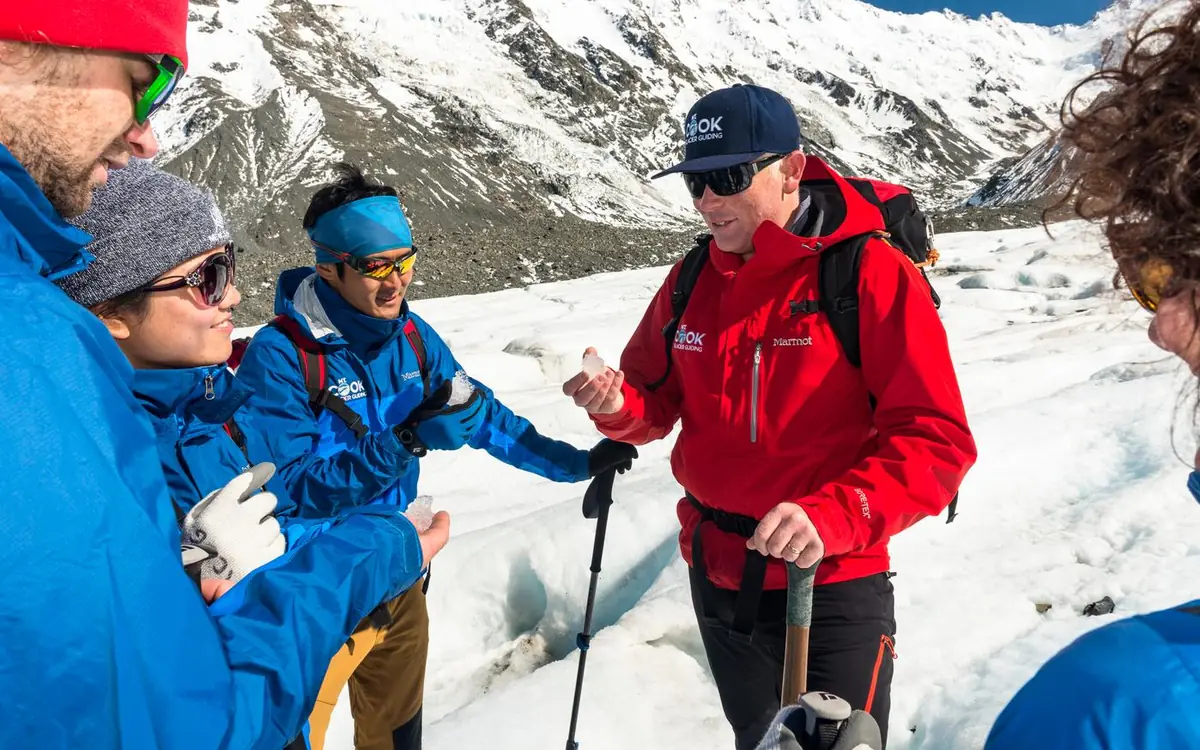
Socks and a jumper. Everything else on the ice is issued.
Boots, crampons, a waterproof jacket and a small pack are supplied on every heli hike, and so are sunglasses if you turn up without a pair. That is deliberate — glare off snow at thirteen hundred metres is severe enough that operators treat eye protection as equipment rather than as your problem.
What you bring is two things.
Thick socks, and a spare pair. The supplied boots are stiff and heavy and they are not your boots. A decent pair of walking socks is the difference between a comfortable ninety minutes and a blister, and the spare goes in the pack.
A warm mid-layer. A fleece or a light down layer to go under the supplied jacket. It is around freezing on the ice in every month of the year and the jacket is waterproof rather than warm.
What you should not bring is your own hiking boots. The operator issues boots specifically because they are stiff enough to hold a crampon; ordinary walking boots flex, and a crampon on a flexing boot comes off. People buy boots for this trip every season and never use them.
The winter answer is different enough to be its own page.
Walking here in winter→Book direct
The glacier walk, the guided valley day, and the flight where you need nothing at all.
★ 4.9 · 322 reviews
★ 4.8 · 566 reviews
★ 4.7 · 514 reviews
Common questions
For the valley tracks in summer: trainers, a windproof rain jacket, two litres of water, sunscreen and insect repellent. For the Tasman Glacier heli hike: thick socks and a warm mid-layer, because boots, crampons, a jacket and sunglasses are all supplied.
No. It is formed track and boardwalk with about a hundred metres of climb, and trainers are fine in summer. In winter DOC recommends microspikes and poles because the shaded flat sections ice over.
No, and do not buy any. The operator issues boots stiff enough to hold a crampon; ordinary walking boots flex and the crampon comes off. Bring thick socks instead.
Around freezing at the landing site in every month of the year, usually with a light wind coming off the ice. The supplied jacket is waterproof rather than warm, which is why the mid-layer matters.
Yes, at the car parks and along the river edges, particularly at White Horse Hill. Not on the open track and not up on the ice. Repellent is the most useful small item in your bag here.
On the glacier, absolutely, and the operator hands you a pair if you arrive without. On the valley tracks they are simply sensible — the UV is fierce and there is very little shade anywhere in this park.
Go deeper
Six marked tracks from the village, with real DOC times and distances.
On the iceThe only walk on the longest glacier in New Zealand, and what the three hours contain.
The famous oneTen kilometres return, three swing bridges, a lake full of icebergs, and it is free.
The hard one2,200 steps and 600 metres of climb, and where the walking stops and mountaineering starts.
The free view300 steps to a viewpoint over a lake that did not exist in 1970.
PricesThree heli hikes priced against the flights and against the walks that cost nothing.
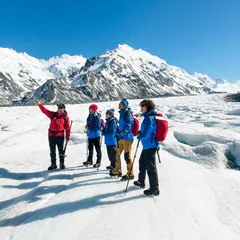
3-Hour Tasman Glacier Heli Hike
★ 4.9 · 646 reviews · Free cancellation 24 h