
Alpine landing514 reviews
25 min25-Minute Alpine Landing
★ 4.7 · 514 reviews
- 25 minutes, at Aoraki Mount Cook
- Helicopter flight
- Tasman Valley
- Free cancellation
$210$504.00 / hour
Check availability→ 2,200 steps, and then a decision
Sealy Tarns is 2,200 steps and six hundred metres of climb for the view that ends up in everybody’s photographs. It is the hardest thing most visitors to Aoraki attempt and it is still, technically, a walk. What sits above it is not: the Department of Conservation says the Mueller Hut route needs mountaineering experience and can hold snow and ice from March through November. This page is about where the line between those two things falls.
Quick answer
The short answer. Sealy Tarns is a hard half day on a stepped track — 2,200 steps, 600 metres up, and the same back down. Fit walkers do it unguided all summer. Mueller Hut above it is a different activity and DOC is explicit that it needs mountaineering experience. Do not treat the second as a longer version of the first.
The steps
No difficulty, no exposure, and six hundred metres of stairs. It is a fitness question, not a skill one.
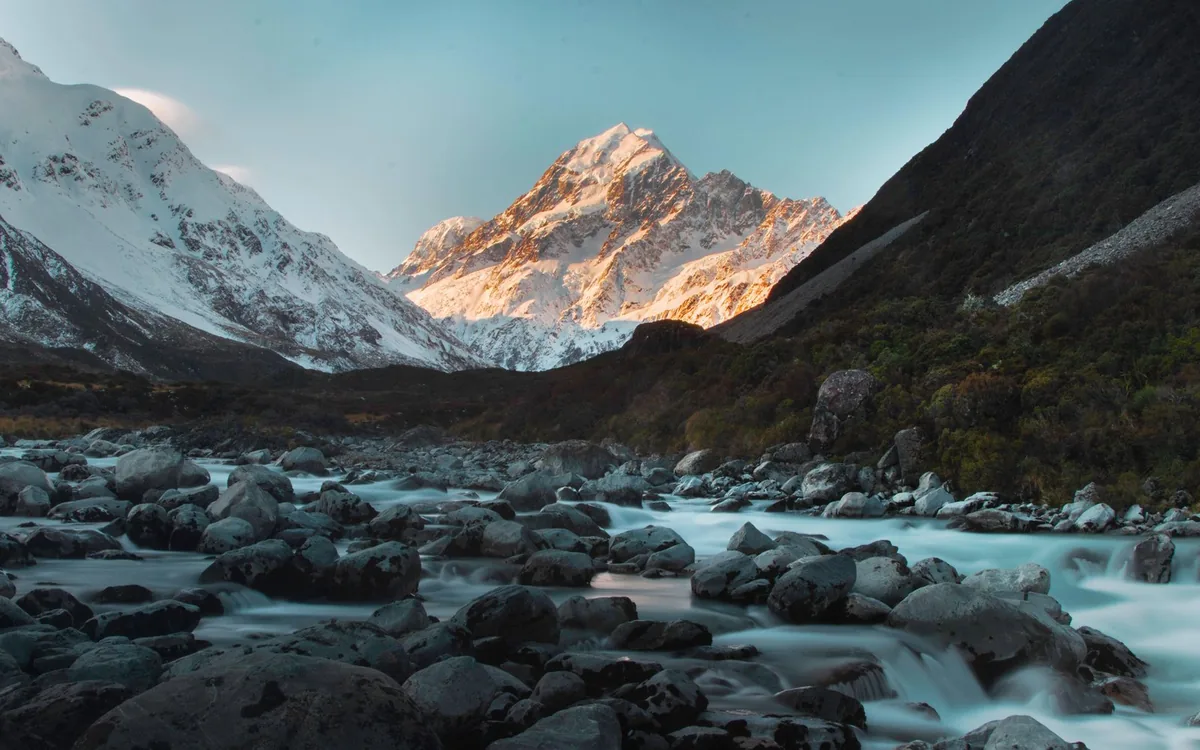
The track leaves the Kea Point path and turns uphill, and from there it is stairs. Not a zigzag path with some steps in it — stairs, cut and built, six hundred vertical metres of them, with the Hooker Valley opening out further below you every time you stop.
There is no technical difficulty and no exposure to speak of. What there is, is relentless ascent with nothing to break the rhythm, and DOC’s own warning that the track is very steep and narrows as it approaches the tarns, where it is easy to slip when snow is present.
Most reasonably fit walkers take somewhere between an hour and a half and two and a half hours to the tarns, and rather less coming down — though coming down 2,200 steps has its own opinions about your knees.
At the top: two small alpine tarns that reflect the Sealy Range on a still morning, and a view straight down the Hooker Valley to Aoraki. That is the photograph.
Where walking stops
Above Sealy Tarns the marked steps end and a route begins, and the difference matters.
DOC does not hedge on this. The Mueller Hut route requires mountaineering experience, and there can be snow and ice on it from March to November — which is nine months of the year. In those conditions it needs an ice axe, crampons and the ability to use them, and there is avalanche terrain involved.
In high summer, in settled weather, experienced hill walkers do reach the hut. That is a real thing and we are not going to pretend otherwise. But it sits at 1,800 metres on an alpine ridge, there is no shelter between the tarns and the hut, and DOC’s advice is to turn back if you see weather coming from the north-west, because on this side of the Divide that is where it comes from and it arrives fast.
If the phrase “mountaineering experience” does not describe you, Sealy Tarns is the destination and it is a good one.
If you are going up
Written for Sealy Tarns in summer.
The steps face east and the sun is on them by mid-morning. More importantly, the tarns are still on a calm morning and they reflect; by afternoon there is usually a breeze and the reflection is gone.
Six hundred metres of climb with no water on the track. Two litres is not excessive in February.
The descent is 2,200 steps of impact. If your knees are marginal, poles turn this from unpleasant into fine.
DOC’s own advice, and it is the single safety point on this page. There is no shelter and no alternative route. If a front is building over the Divide, turn round.
The alpine parrot up here will take anything not attached to you, and it can open a pack. Do not leave gear unattended at the tarns and do not feed them.
If the steps are more than you want, the flat one is ten kilometres and free.
The Hooker Valley Track→Book direct
Three flights that put you above the Sealy Range without the 2,200 steps.
★ 4.7 · 514 reviews
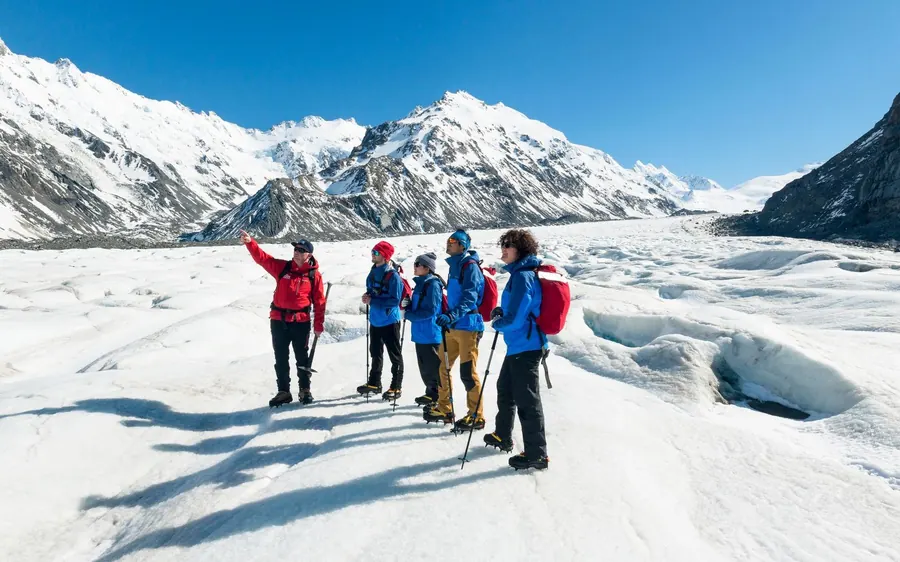
★ 4.9 · 322 reviews
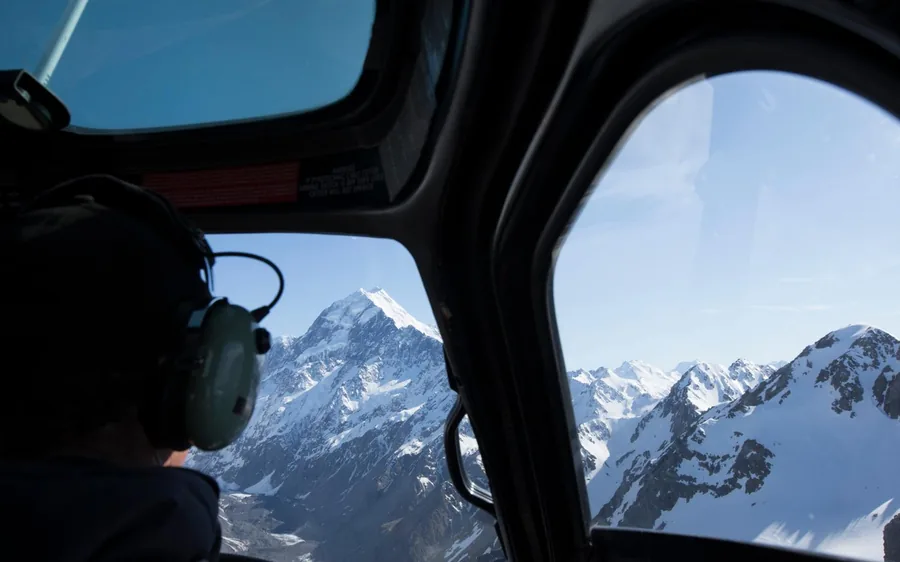
★ 4.7 · 22 reviews
Common questions
Hard, but not technical. DOC publishes it as 2,200 steps and 600 metres of climb, and warns that it is very steep and narrows near the top. Most fit walkers take an hour and a half to two and a half hours up. There is no exposure and no scrambling.
2,200, according to the Department of Conservation. They are built steps rather than a zigzag path, which is what makes the climb relentless — there is nothing to break the rhythm.
DOC says the route requires mountaineering experience, and that there can be snow and ice on it from March to November. In settled high summer experienced hill walkers do reach it, but it is a route rather than a track, there is no shelter, and it is not a longer version of Sealy Tarns.
Not for walkers. Aoraki is 3,724 metres and climbing it is technical mountaineering with glacier travel and roped alpine climbing. The highest a walker gets on marked ground here is Sealy Tarns, or Mueller Hut with alpine skills.
Yes, bookings are required through DOC and the hut is popular in summer. That is separate from the question of whether the route suits you, which is the one that matters more.
Straight down the Hooker Valley with Aoraki at the head of it, the Mueller Glacier below on the other side, and the Hooker and Mueller lakes both in frame. On a still morning the tarns themselves reflect the Sealy Range.
Go deeper
Six marked tracks from the village, with real DOC times and distances.
On the iceThe only walk on the longest glacier in New Zealand, and what the three hours contain.
The famous oneTen kilometres return, three swing bridges, a lake full of icebergs, and it is free.
The free view300 steps to a viewpoint over a lake that did not exist in 1970.
PricesThree heli hikes priced against the flights and against the walks that cost nothing.
VerdictWhich glacier to walk on, decided on ice time, group size and what is included.

3-Hour Tasman Glacier Heli Hike
★ 4.9 · 646 reviews · Free cancellation 24 h